NordIAS fellow exchange to the Material Ecologies of Design group in Norway
Through the NordIAS network for Institutes for Advanced study in the Nordics, AIAS-AUFF fellow Emily Cockayne went on a NordIAS Visiting Fellowship to Oslo. She came back with novel ideas and extended network for her cultural study of old ‘plastic’ materials and how these may be reinvented as substitutes for modern plastics.

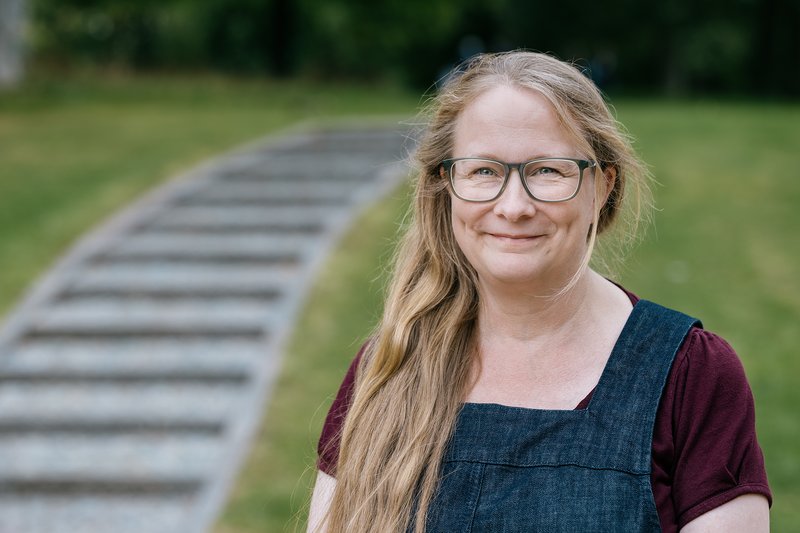
Emily Cockayne is a historian from the University of East Anglia in the UK, currently in a one-year fellowship at AIAS. In her AIAS project 'Recreating historical non-synthetic plastics: relearning Victorian recycling for environmental good', she studies the past production of ‘plastics’ made from industrial byproducts and explores how these early plastics have endured in soil, water, and other contexts.
One part of Emily Cockayne’s research project is to connect with researchers working on plastics and recycling in order to establish an interdisciplinary network of scholars who are invested in the recreation of non-synthetic plastics that are less damaging to the environment, at the point of production and in use.
Novel ideas, novel applications for the common good
During a short-term NordIAS Visiting fellowship to AIAS’s ‘sister institute’ in Oslo in Norway, the Centre for Advanced Study (CAS) at the Norwegian Academy of Science and Letters, Emily Cockayne was active with a materials handling session in the Material Ecologies of Design group, contributing with a paper to an international workshop on Mining Modernity, and delivering a public lecture on ‘Nineteenth-Century Plastics: Alchemy, Alterity and Artificiality’ at an accompanying symposium.
“This NordIAS Visiting fellowship stay has generated significant ongoing momentum. The experience helped me establish long-term connections, and the completion of a grant application that directly incorporated new ideas gathered during my stay,” Emily Cockayne explains.
Develop alternative materials to the current (over)use of plastics
One of the main goals of the NordIAS Visiting fellowships is to establish extended network across the Nordic region with researchers across the Nordics abd from abroad, and to get novel insights from different fields and groups of researchers. For Emily Cockayne the stay has helped extend the group of scholars working to help contributing with better knowledge and developing alternative materials to the current fossil-fuel based plastics that are damaging for our environment.
Emily Cockayne stay in Oslo was not only professionally but also socially stimulating:
“My time as a visiting research fellow in Oslo was both productive and stimulating, made straightforward by the efficient organisation at AIAS, CAS, and the Material Ecologies of Design group. After initially reaching out to the project leads via their informative website, I was welcomed into a pleasant environment with a dedicated office, daily team lunches, and evening social events.”
Extending your network?
Do you work on topics related to Emily Cockayne’s project and interested in extending your network across disciplines, you are welcome to reach out to Emily Cockayne via the contact information below.
Contact
Emily Cockayne, AIAS-AUFF Fellow
E-mail: emco@aias.au.dk
Aarhus Institute of Advanced Studies, AIAS
Høegh-Guldbergs Gade 6B
DK-8000 Aarhus C
Denmark