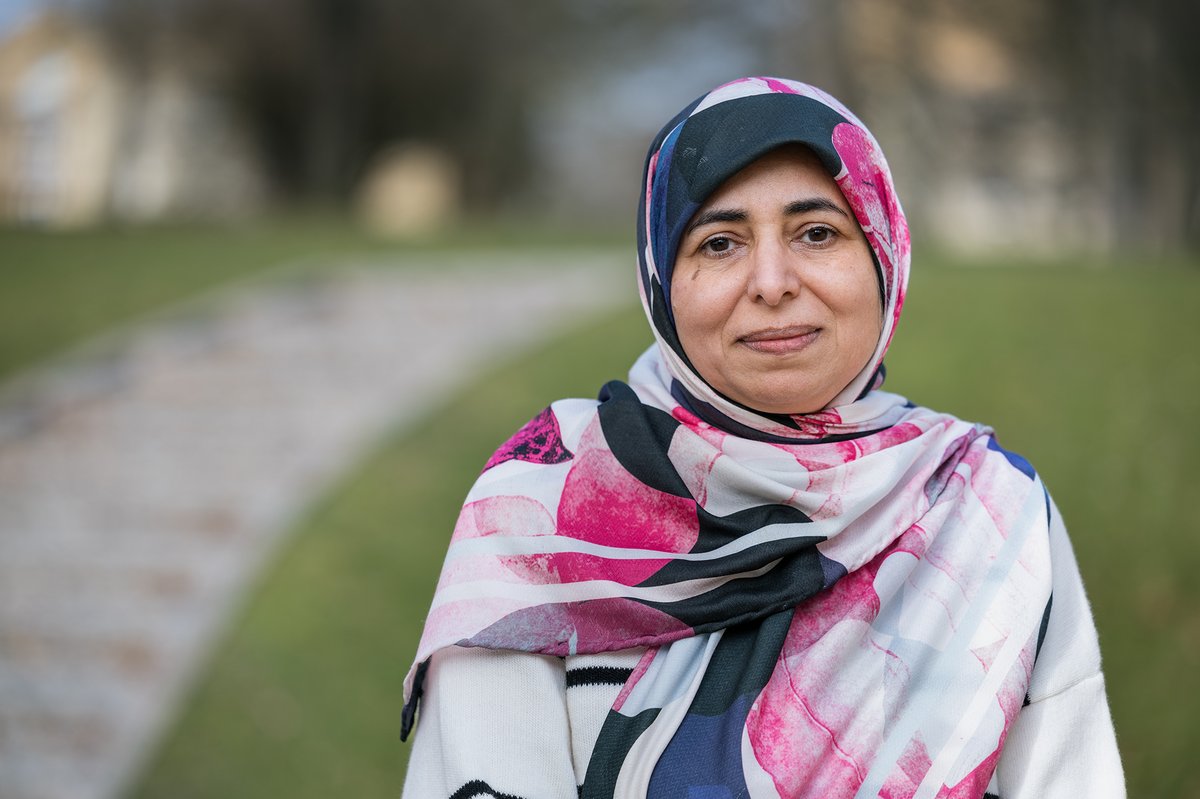
Assistant Professor of Islamic Political Thought, University of Guilan, Iran.
During her AIAS fellowship, Masoumeh Rad Goudarzi will be working on the project “Shi’a Reformist Jurists and the Challenge of Women’s Rights in Islam: Presenting an Egalitarian Reading of Religion”
One of the most pervasive yet often subtle forms of discrimination against women in Islamic jurisprudence concerns inequality within the family sphere, including issues such as the age of marriage, legal capacity to marry, financial rights, divorce, child custody, and guardian-ship. Traditional jurists, operating on the assumption of a single “natural” model of the family system—within which men and women are assigned distinct and hierarchical roles—have formulated legal provisions that grant differentiated rights to each gender. Within classical jurisprudence, women are granted fewer rights than men in many areas. Traditional jurists have generally considered women ineligible for major political leadership, judicial authority, and high-level governance. In matters such as blood money (diyah), a woman’s compensa-tion is set at half that of a man’s. These rulings reflect a broader juridical outlook in which women are treated as second-tier legal subjects, often assigned half the economic value at-tributed to men.
Over the past two decades, however, a group of prominent Shiʿa jurists—now commonly identified as reformist jurists—have adopted a more rational and critical approach to the interpretation of legal sources and Islamic texts. By re-examining foundational assumptions and interpretive methodologies, they have opened new avenues for reading Islamic sources. Critiques of traditional rulings on women’s rights have become a central focus of their jurisprudential inquiry. The outcome of these efforts has been a significant reassessment of the epistemological, theological, and jurisprudential foundations governing women’s individ-ual, familial, judicial, and socio-political rights. Shiʿa reformist jurists have sought to fundamentally revise prevailing attitudes toward women by advancing the principle of non-discrimination between men and women as a guiding norm in jurisprudential reasoning.
The aim of this project, “Shiʿa Reformist Jurists and the Challenge of Women’s Rights in Islam: Presenting an Egalitarian Reading of Religion,” is to examine and present the ways in which reformist jurists have introduced transformative changes to traditional jurispru-dence. The project addresses several key questions:
I am an Assistant Professor of Political Science in the Department of Political Science, Faculty of Humanities, at the University of Guilan, Iran. My research lies at the intersection of religion and politics, with a particular focus on Islamic political thought, Islamic political theology, and Shiʿa political jurisprudence. I specialize in contemporary methodological de-elopments in Shiʿa jurisprudence, especially the work of Shiʿa reformist jurists and their engagement with questions of human rights.
Project title: Shi’a Reformist Jurists and the Challenge of Women’s Rights in Islam: Presenting an Egalitarian Reading of Religion
Area of research: Islamic Political Thoughts and Islamic Feminism
Fellowship period:1 March 2024 - 31 December 2026
Fellowship type: AIAS Fellow
Contact:
m.rad@aias.au.dk

This fellowship has received funding from The Aarhus University Research Foundation (AUFF)