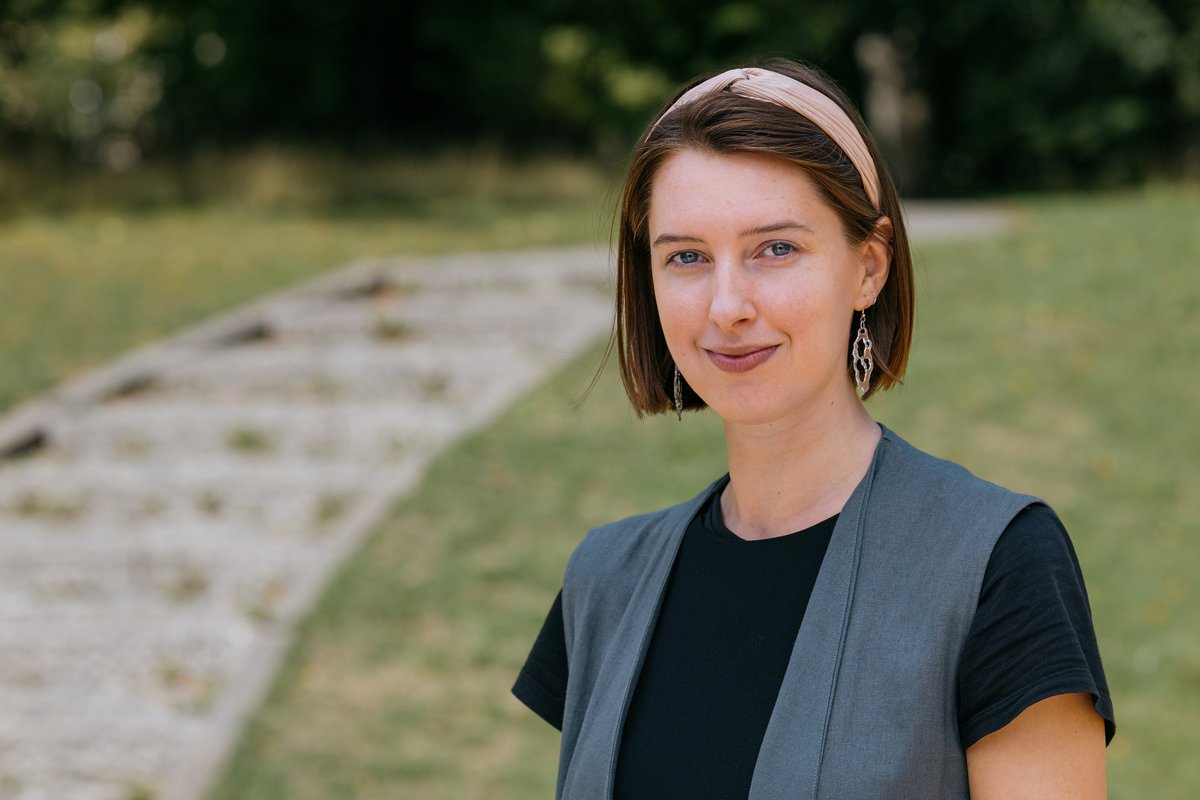
Artist, b. Huddersfield, UK
During her Artist-in-Residence Fellowship, Amy Boulton will collaborate with Associate Professor Pablo Velasco from Aarhus University on the project 'Data Intimacies: Love and labour in an age of AI'
Data Intimacies: love and labour in an age of AI examines how AI chatbots stage intimacy through affective, human-like interaction, producing attachments for extractive data economies. The project seeks to stretch the common understanding of AI chatbots by developing artistic provocations focused on the human capacity to form attachment to these relational agents. Framed within artistic research and critical data studies, the project aims to develop both a critique that considers the extractive political economy of AI-powered chatbots, and an interactive Extended Reality (XR) art piece that offers an embodied live conversational experience with an avatar AI chatbot. Methodologically, this project builds on speculative fiction, and is supported by digital methods, with a specific focus on XR techniques. The embodied VR chabot/avatar, designed to both perform and critique its own digitally automated praxis, subverts the common tropes of generative AI in relation to emotional labour, sex work, and intimate interactions.
Amy Boulton (she/her) is a contemporary artist, researcher and XR developer based in Stockholm. Her works span the fields of new media art, public art and immersive performance. Many of her art works are interactive, taking forms such as mobile augmented reality, urban games and web-based chatbots. She holds an MFA in Fine Arts from HDK-Valand Göteborg and BFA in Intermedia Art from Edinburgh College of Art at the University of Edinburgh. Artist website: amyboulton.info
Project title: Data Intimacies: Love and labour in an age of AI
Area of research: Contemporary Art theory & practice, New Media Art, XR Technologies
Fellowship period: 1 Sep 2026 - 30 Jun 2027
Fellowship type: Artist-in-Residence Fellow
Contact: amyb@aias.au.dk

This fellowship has received funding from The Aarhus University Research Foundation (AUFF)