Social (In)justice, Indigeneity and Colonialingualism: Recognition, Resistance and Re-Existence
Venue: Aarhus Institute for Advanced Studies, Aarhus University, Denmark (and online)
Dates: 26 - 27 February 2026
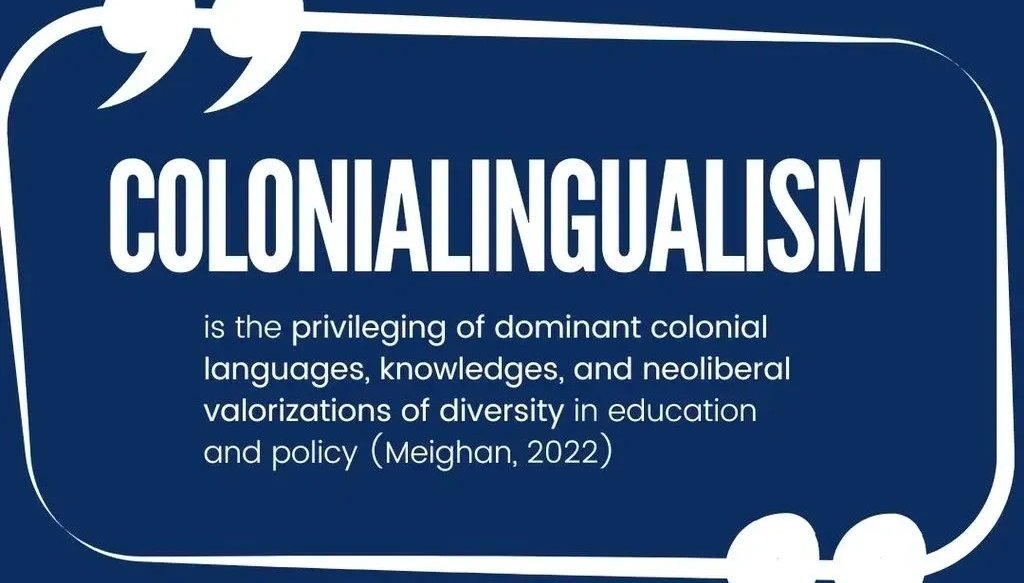
Languages are not neutral tools of communication. Colonial languages often carry imperial legacies and neoliberal value systems that privilege economic utility over cultural and epistemic significance. This process—conceptualised as colonial-lingualism—continues to marginalise indigenous, minority, and heritage languages while reinforcing asymmetrical power relations. Across contexts, language policies frequently reproduce assimilationist models that obscure linguistic diversity and suppress alternative knowledge systems. Even initiatives framed as decolonial may result in new dominant vernaculars that subsume local speech forms and practices.
This symposium explores the applicability of decolonial thought to Nordic indigenous contexts, enriching and nuancing these perspectives through the voices of Sámi, Greenlandic Inuit, other indigenous communities, and heritage language speakers. It also invokes indigenous articulations of everyday language forms in erstwhile colonies like India, South Africa and Colombia to develop a comparative insight on colonial and decolonial thought through language.
Some of the themes that the symposium aims to engage with are as follows:
Focus of the Symposium
Intra-European colonial histories/linguistic nationalism, the Nordic colonial legacies and the Sámi/de-centering dominant narratives of North-South polarity. Further to explore points of convergence between the North-South, South- South, paving way for transversal exchanges.
Framing Question
To what extent can multilingual interactions in the Nordic regions disrupt linguistic hierarchies rooted in colonial legacies and reshape dominant language ideologies? How do these disruptions inter-act with the multilingual societies elsewhere such as South Asia, South Africa, Chile and Colombia, and processes of vernacularisation set in motion with respect to colonisation in some cases.
The workshop is open to all, researchers, practitioners, officials and others, interested in the topics listed above. Participation in the workshop is free of charge, but participants will need to cover their own travel and accommodation expenses.
Registration link can be found here.
If you wish to attend the symposium online, please send an e-mail to Emilie Bro Larsen emilie@aias.au.dk to get a link.
This symposium is organised by:
This symposium is part of a study circle grant received from the Nordic Summer University (NSU). NSU is an independent academic institution based in Sweden and organises winter and summer symposia that draw international participants across disciplines in the Nordic and Baltic regions and beyond.
The symposium has received support by the Carlsberg Foundation.